




Stained Glass Telecom Background
IEEE ICC 2026 NIA Logo University of York University of Surrey
May 24, 2026 • Glasgow, Scotland

The 2nd International Workshop on Open Radio Access Networks

Architectural disaggregation, standardized open interfaces, and ecosystem-led innovation for the future of mobile networks. Held with IEEE ICC 2026.

2nd
Edition
20+
Research Topics
3
TPC Chairs
IEEE
Publication

Call for Papers

Workshop Scope

After a successful first edition of the Open RAN workshop at WCNC 2025 we are holding the second edition at ICC 2026.

Open RAN has accelerated from concept to deployment reality, reshaping the global RAN landscape through architectural disaggregation, standardised open interfaces, and an ecosystem-led innovation model. With the rise of software-driven networks, RIC-native intelligence, and AI-enabled automation, the research frontier now spans from real-time control and vendor interoperability to conflict mitigation, security assurance, orchestration, spectrum efficiency, and policy frameworks that enable fair adoption at scale.

This workshop provides a premier venue to discuss breakthroughs in Open RAN architectures, optimization, theory, systems, hardware/software codesign and field deployments. We welcome high-quality contributions on both theoretical advances and practical implementations including working prototypes, trial reports, live testbed results and reproducible experimental frameworks.

Submissions addressing spectrum economics, market regulation, and cross-domain policy for global Open RAN adoption are also strongly encouraged.

Topics of Interest

We welcome submissions across a wide range of topics in Open RAN research.

RIC Architecture, Near-RT and Non-RT Control

xApp/rApp Interoperability and Marketplace Design

xApp/rApp Conflict Detection, Avoidance, and Resolution

Explainable, Causal, and Safe AI in Open RAN

Foundation Models and Transformer-based Control for RAN

Digital Twin-based RAN Optimization and Predictive Control

Testbeds, Simulators, and Open-Source O-RAN Stacks

O-Cloud Acceleration, RAN Virtualisation and Observability

RAN Slicing, SLA Enforcement and Closed-Loop Assurance

Multi-Agent RL for Scheduling, Handover, and Traffic Steering

Energy-Efficient RAN, Carbon-Aware Scheduling, Sleep Modes

Security, Zero-Trust O-RAN, and Supply-Chain Attestation

Confidentiality and Privacy in rApp/xApp Inference Workflows

Spectrum Sharing, Economics, and Policy for Open RAN Adoption

Cross-Vendor Interoperability for Massive MIMO and OpenFAPI

Open RAN Backhaul/Fronthaul over PON and Optical Networks

NTN/LEO-Integrated Open RAN Architectures for 6G

Resource Marketplaces, SLA-Aware Bidding and Federation

Production-Grade Operational Insights from Trials and Deployments

Benchmark Datasets, Evaluation Metrics and Reproducible Research

TPC Co-Chairs

Meet the technical program committee chairs who will oversee the paper review and selection process.

Nima Afraz
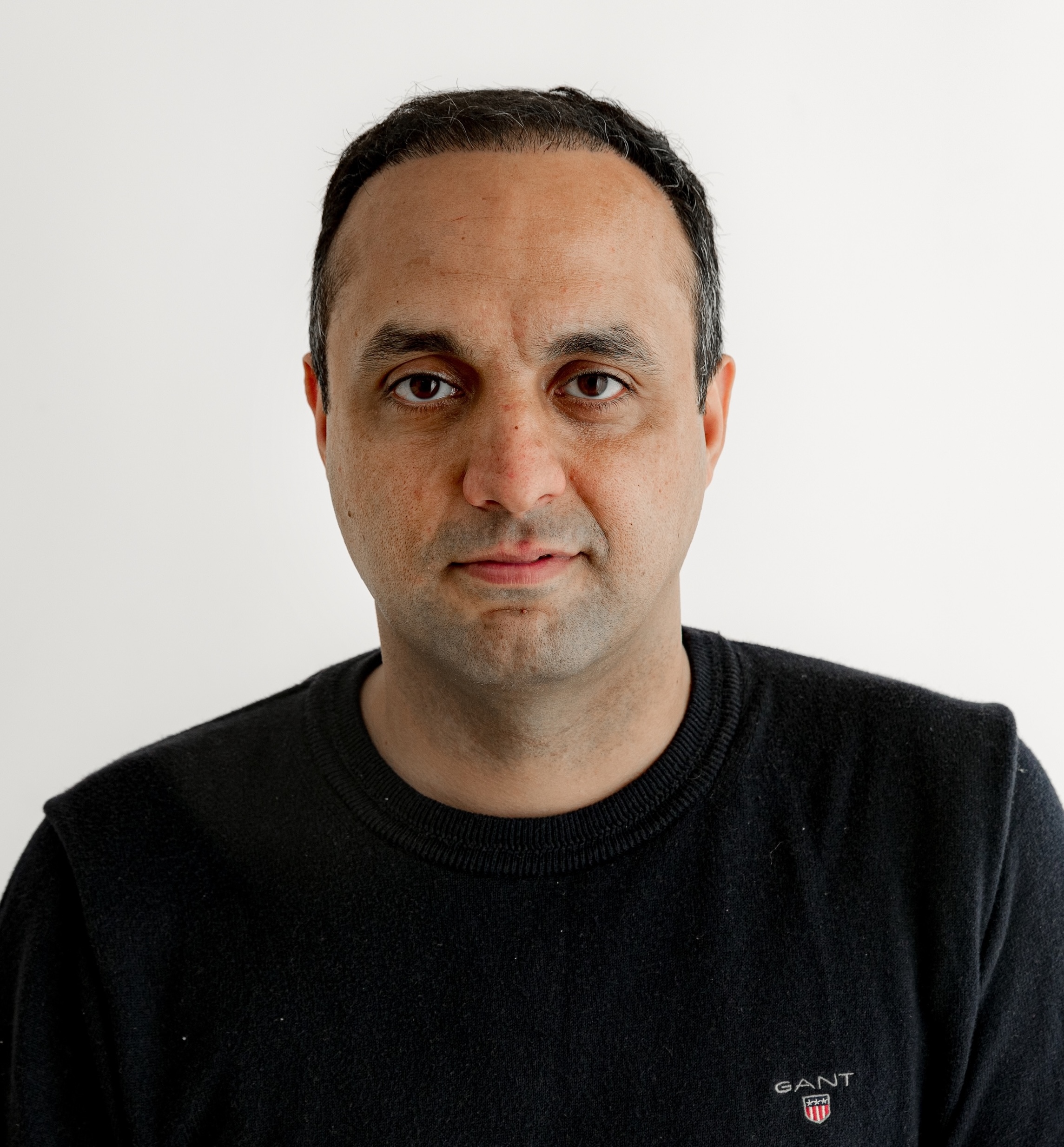
Nima Afraz

University College Dublin
Dublin, Ireland
Mohammad Shojafar

Mohammad Shojafar

University of Surrey
Surrey, United Kingdom
Hamed Ahmadi

Hamed Ahmadi

University of York
York, United Kingdom

Technical Program Committee

Distinguished researchers and experts contributing to the technical review process.

Aly sabri Abdalla
Mississippi State University, USA
Zakaria Abou El Houda
INRS, Canada
Akram Aburas
Advanced Communications & Electronics Systems (ACES)., Saudi Arabia
Oscar Adamuz-Hinojosa
University of Granada, Spain
Apurba Adhikary
Noakhali Science and Technology University, Bangladesh
Nima Afraz
University College Dublin, Ireland
Hamed Ahmadi
University of York, United Kingdom (Great Britain)
Ali Ahmed
Advanced Communications & Electronics Systems (ACES)., Saudi Arabia
Sabbir Ahmed
University of Oulu, Finland
Khurshid Alam
German Research Center for Artificial Intelligence, Germany
Hamed Alimohammadi
University of Surrey, United Kingdom (Great Britain)
Jose Ayala-Romero
NEC Laboratories Europe, Germany
Osman Basaran
Technical University of Berlin, Germany
Dario Bega
Nokia Bell Labs, Germany
Leonardo Bonati
Northeastern University, USA
Vasile Bota
Technical University of Cluj Napoca, Romania
Tsung-Wei Chiang
National Chung Cheng University, Taiwan
Nakjung Choi
Nokia, USA
Salvatore D'Oro
Northeastern University, USA
Aloizio Da Silva
Virginia Tech, USA
Ngoc-Dung Dao
Huawei Technologies Canada Co., Ltd., Canada
Matthieu De Mari
Singapore University of Technology and Design, Singapore
Yang Deng
Nokia Bell Labs, USA
Falko Dressler
TU Berlin, Germany
Marcin Dryjanski
RIMEDO Labs, Poland
Sina Ebrahimi
Coventry University, United Kingdom (Great Britain)
Erika Fonseca
CONNECT Research Centre, Trinity College Dublin, Ireland
Ramon dos Reis Fontes
Federal University of Rio Grande Do Norte, Brazil
Luca Foschini
University of Bologna, Italy
Víctor Gil Jiménez
University Carlos III of Madrid, Spain
Fabrizio Granelli
University of Trento, Italy
Joshua Groen
Northeastern University, USA
Neha Gupta
University of Surrey, United Kingdom (Great Britain)
Bin Han
RPTU Kaiserslautern-Landau, Germany
Tai Ho
École de Technologie Supérieure ÉTS, Canada
Seung-Eun Hong
Electronics and Telecommunications Research Institute, Korea (South)
Cheng-Feng Hung
National Taiwan University of Science and Technology, Taiwan
Ahan Kak
Nokia Bell Labs, USA
Rafael Kaliski
National Sun Yat-Sen University (Taiwan), Taiwan
Minseok Kim
Niigata University, Japan
Adrian Kliks
Poznan University of Technology, Poland
Koteswararao Kondepu
Indian Institute of Technology Dharwad, India
Haiyuan Li
University of Bristol, United Kingdom (Great Britain)
Peizheng Li
Toshiba Europe Ltd., United Kingdom (Great Britain)
Adriana Lipovac
University of Dubrovnik, Croatia
Fatemeh Lotfi
Clemson University, USA
Andrea Marotta
University of L'Aquila, Italy
Kazuki Maruta
Tokyo University of Science, Japan
Motoharu Matsuura
The University of Electro-Communications, Japan
Bruno Missi Xavier
Federal Institute of Espirito Santo - Campus Cachoeiro de Itapemirim, Brazil
Shahram Mollahasani
University of Ottawa, Canada
Sourav Mondal
University of Melbourne, Australia
Sofia Montebugnoli
University of Bologna, Italy
Leila Nasraoui
University of Manouba, Tunisia
Augusto Neto
Federal University of Rio Grande Do Norte (UFRN), Brazil
Van-Linh Nguyen
National Chung Cheng University, Taiwan
Homayoun Nikookar
Netherlands Defence Academy, The Netherlands
Rawlings Ntassah
University of Trento, Italy
Roberto Pacheco
Universidade Federal Fluminense, Brazil
Claudio Paoloni
Lancaster University, United Kingdom (Great Britain)
Milica Pejanovic-Djurisic
University of Montenegro, Montenegro
Alberto Perotti
Politecnico di Torino, Italy
Michele Polese
Northeastern University, USA
Corrado Puligheddu
Politecnico di Torino, Italy
Avi Raha
Kyung Hee University, Korea (South)
Md Habibur Rahman
Virginia Tech, USA
Pasika Ranaweera
University College Dublin, Ireland
Steve Ratti
University of L Aquila, Italy
Olivier Renaudin
Fraunhofer IIS, Germany
António Rodrigues
IT / Instituto Superior Técnico, Portugal
Andrea Sabbioni
University of Bologna, Italy
Joao Santos
Virginia Tech, USA
Fanhua Shang
Tianjin University, China
Rashmi Sinha
Nanyang Technological University, Singapore
Suresh Subramaniam
George Washington University, USA
Mario Tanda
Università di Napoli Federico II, Italy
Panagiotis Trakadas
University of Athens, Greece
Theodoros Tsiftsis
University of Thessaly, Greece
Pratheek Upadhyaya
Virginia Tech, USA
Dejan Vukobratović
University of Novi Sad, Serbia
Abdul Wadud
University College Dublin, Ireland
Qingtian Wang
China Telecom Research Institution, China
Yuan Wu
University of Macau, Macao
Kun Yang
Zhejiang Ocean University, China
Lanfranco Zanzi
NEC Laboratories Europe, Germany
Engin Zeydan
CTTC, Spain

Important Dates

Mark your calendar with these important deadlines for the workshop.

Submission Deadline
18 January 2026

Submit your original research papers through the EDAS submission system.

Notification of Acceptance
8 March 2026

Authors will be notified of paper acceptance decisions.

Camera Ready
15 March 2026

Submit your camera-ready papers with all revisions addressed.

Workshop Date
24 May 2026

Join us in Glasgow, Scotland for presentations and networking.

Submission Details

Guidelines and requirements for paper submission to the Open RAN Workshop.

Paper Submission Guidelines

Page Limit

The page length limit for all initial submissions is SIX (6) printed pages (10-point font). Papers exceeding this limit will be rejected without review.

Language

All submissions must be written in English and follow the IEEE ICC 2026 formatting guidelines.

Publication

Accepted and presented papers will be included in the IEEE ICC 2026 Conference Proceedings and submitted to IEEE Xplore®.

Submission Portal (EDAS)

Submission link will be provided via EDAS. For further details, visit the IEEE ICC 2026 website.